
Planning a New Deck in Hawke’s Bay? What to Sort Before Summer
Once the weather turns in Hawke’s Bay, most of us start looking at the back of the house a bit differently. That patch of lawn that never quite works. The old deck that’s gone soft in one corner. The ranch slider that opens onto nothing much.
A new deck is one of the most common projects homeowners ask us about at this time of year. It’s also one where a bit of planning up front makes a big difference to how much you end up using it. Here’s what’s worth thinking about before you book anything in.
Start with how you’ll actually use it
Before talking timber or size, think about what the deck is for.
- Eating outside? You’ll want room for a table and chairs with space to walk around them, not just squeeze past.
- Somewhere to sit with a coffee? A smaller deck in the right spot can get more use than a big one in the wrong spot.
- Entertaining? Think about how people move between the kitchen, the deck and the lawn.
- Kids and pets? Steps, edges and where the gate goes start to matter more.
It’s easy to draw a rectangle off the back door. It’s better to work out where you’ll want to be at 5pm on a January evening.
Sun, shade and wind
Hawke’s Bay gets plenty of sun, which is great until you’re sitting on a north-facing deck at 2pm with no shade. On the flip side, a deck on the south side of the house can feel cold and stay damp for longer.
A few things to look at:
- Where the sun is in the morning, midday and evening during summer
- Which direction the wind usually comes from at your place
- Whether you’ll want a pergola, shade sail or screening later on
If you think you’ll add a pergola down the track, it’s worth mentioning early. It can affect how the deck is framed and where posts go.
Do you need a building consent for a deck?
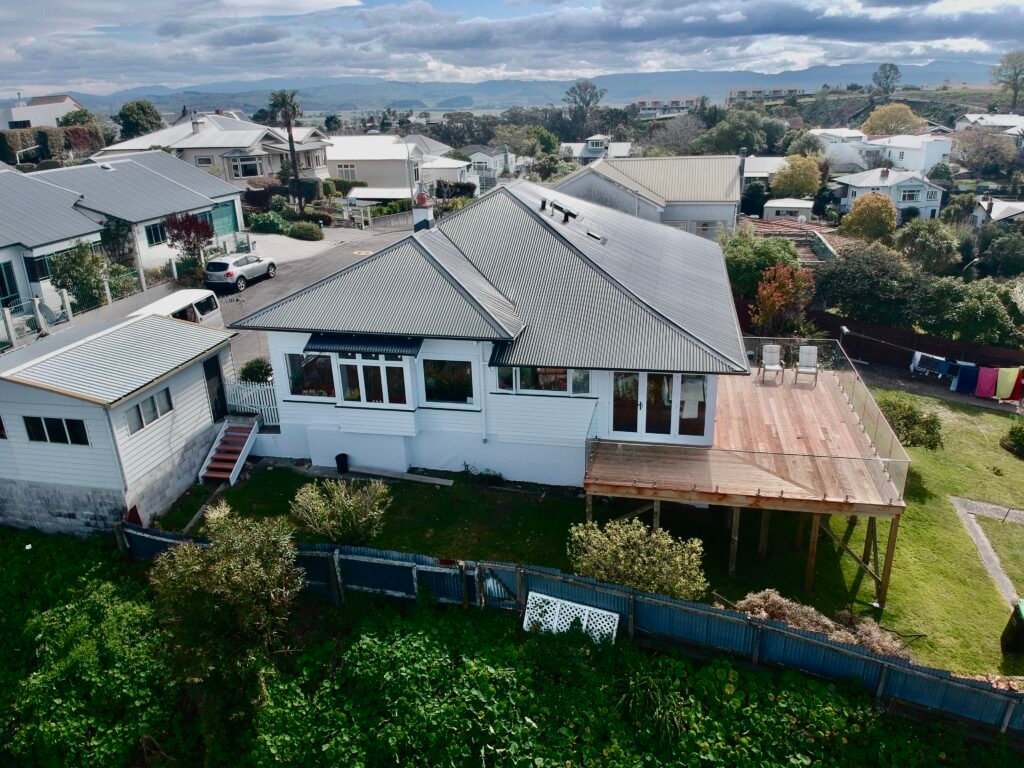
This is one of the questions we get asked most.
In New Zealand, many decks don’t need a building consent. Under Schedule 1 of the Building Act, a deck where the fall height is 1.5 metres or less is generally exempt. That height is measured from the deck surface to the ground below, not from the house. On a sloping section, the low end of the deck can be higher than it looks.
A few things to keep in mind:
- Exempt doesn’t mean anything goes. The deck still has to meet the Building Code, including footings, fixings and any barriers.
- Some decks will need consent. For example, if it’s higher than the exemption allows, if it forms part of a pool barrier, or if the work involves structural changes to the house.
- District plan rules still apply. Things like boundary setbacks can come into play, so it’s worth checking with Napier City Council or Hastings District Council.
If you’re not sure where your project sits, ask your builder or the council before work starts. It’s a lot easier to sort this out at the planning stage.
Timber or composite?
Most decks in Hawke’s Bay are timber, and for good reason. It looks good, it’s cost-effective and it suits a lot of homes, especially character and older properties.
The main options people ask about:
- Pine decking. Common, affordable and widely available. Needs to be the right treatment for outdoor use and benefits from regular oiling or staining.
- Hardwood decking. Generally harder wearing with a richer look. Usually costs more and still needs some maintenance.
- Composite decking. Lower maintenance and doesn’t need oiling, but has a different look and feel and a higher upfront cost.
There’s no single right answer. It comes down to your budget, the look you want, and how much time you’re happy to spend on upkeep.
What’s under the deck matters just as much. Piles, bearers and joists need to be the right treatment and spacing for the job. You won’t see them once it’s finished, but they’re what decide how long the deck lasts.
Replace or repair the old deck?
If you’ve already got a deck, the first question is whether it’s worth saving.
Sometimes it’s just the boards that are tired, and the framing underneath is sound. Other times there are soft joists, rotten piles or fixings that have rusted out. A deck that bounces, has spongy spots or is pulling away from the house is worth getting looked at properly.
It’s also worth checking where the deck meets the house. Poor detailing there can let water into the wall behind, which can turn a deck job into a bigger repair. It’s one of the things we look at straight away.
What affects the cost of a new deck?
We get asked about price a lot, and the honest answer is that it depends. The main things that move the cost are:
- Size and shape of the deck
- Height off the ground and how many piles are needed
- Decking material
- Site access and how much prep the ground needs
- Steps, balustrades and built-in seating
- Removing an old deck first
- Extras like pergolas, lighting or screening
The best way to get a realistic number is to have someone look at the site and talk through what you want.
Get in early if you want it for summer
This time of year tends to be busy for outdoor projects. If you’re hoping to have a deck ready for summer, it’s worth getting the conversation started sooner rather than later.
When you get in touch, a few photos of the area, the rough size you’re thinking, and your suburb help us understand the job before we chat about next steps.
Thinking about a new deck?
We build and replace decks across Hawke’s Bay, from Napier and Taradale to Hastings and Havelock North. We also do pergolas and fences if you’re looking at the whole outdoor area.
Planning a new deck in Hawke’s Bay? Send us a message and we’ll go from there.