
Bathroom renovations are one of the most valuable ways to improve a home, but the success of the finished space depends on more than the tiles, tapware, vanity, or shower design. One of the most important parts of any bathroom renovation is what sits underneath the surface: waterproofing.
Good waterproofing helps protect your home from moisture damage, leaks, mould, and costly repairs. It is a key part of creating a bathroom that looks great, performs properly, and lasts over time.
For homeowners planning a bathroom upgrade, understanding the importance of waterproofing in Hawkes Bay can help you make better renovation decisions and avoid problems later.
At Total Renovations, we work with Hawke’s Bay homeowners to refurbish, renovate, and restore bathrooms with practical planning, quality workmanship, and attention to the details that matter.
Why Bathroom Waterproofing Is So Important
Bathrooms are exposed to water every day. Showers, baths, vanities, toilets, steam, condensation, and wet floors all place pressure on the materials around them.
Without proper waterproofing, water can work its way into walls, floors, framing, and adjoining rooms. By the time visible signs appear, the damage may already be more serious than expected.
Poor waterproofing can lead to:
Water damage behind walls or under flooring
Swollen skirting, cabinetry, or linings
Mould and mildew
Rotten timber framing
Loose tiles or failed grout
Damaged ceilings below upper-level bathrooms
Unpleasant smells or dampness
Expensive repair work
A bathroom might look finished on the outside, but if waterproofing has not been done properly, it can create long-term issues for the whole home.
Waterproofing Is More Than Just Sealing Around the Shower
Many people think waterproofing is simply about sealing edges or applying silicone around the shower. In reality, bathroom waterproofing is a complete system.
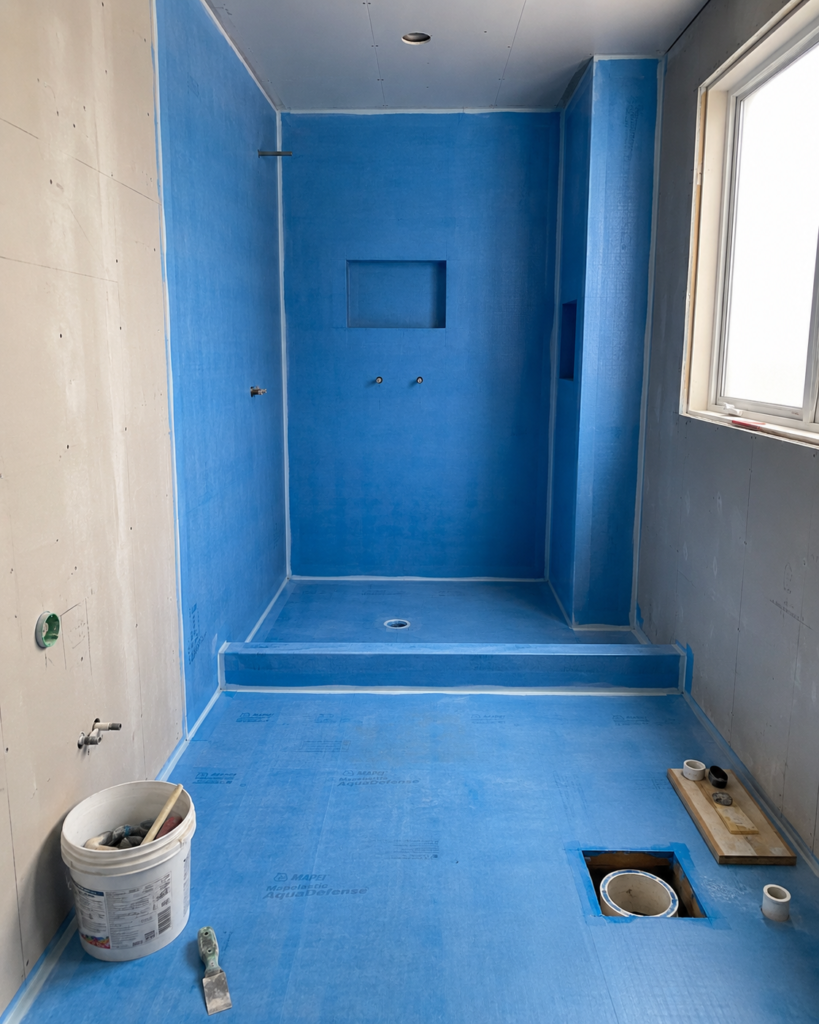
It usually involves preparing the surface, applying waterproof membranes, sealing joints and corners, treating wall and floor junctions, and ensuring high-risk areas are properly protected before finishes are installed.
Important areas include:
Shower walls and floors
Wet room floors
Wall and floor junctions
Around baths
Behind vanities where required
Corners and internal joins
Penetrations for pipes and fittings
Areas exposed to regular splashing or moisture
The goal is to stop moisture from reaching the parts of the home that are not designed to get wet.
Common Signs of Waterproofing Problems
Some waterproofing issues are obvious, while others develop slowly over time. If your bathroom is older or has had previous repair work, it is worth watching for early warning signs.
Common signs include:
Peeling paint near wet areas
Soft or swollen skirting boards
Cracked grout or loose tiles
Persistent mould
Damp smells
Water stains on nearby walls or ceilings
Flooring lifting or bubbling
Silicone that keeps failing
Moisture marks around the shower or bath
These signs do not always mean the entire bathroom needs to be replaced, but they should be investigated before the damage spreads.
Why Hawke’s Bay Homes Need Careful Bathroom Planning
Hawke’s Bay homes come in many ages, styles, and conditions. Some older homes may have dated bathrooms, older plumbing, poor ventilation, or materials that no longer perform well.
When renovating a bathroom, it is the perfect opportunity to check what is happening beneath the surface. Older linings, damaged flooring, previous leaks, or hidden moisture issues can all affect the best approach.
Good waterproofing in Hawkes Bay homes is especially important because bathrooms need to handle daily use, changing temperatures, humidity, and long-term wear.
A bathroom renovation should not just cover up old problems. It should address them properly.
Waterproofing and Bathroom Ventilation Go Together
Waterproofing protects the structure from direct water exposure, but ventilation is also essential. A bathroom that is constantly damp will always be harder to maintain, even with good waterproofing.
Steam and condensation can affect ceilings, paint, cabinetry, mirrors, and walls. Over time, poor ventilation can lead to mould, peeling paint, and a bathroom that feels damp or unpleasant.
During a bathroom renovation, it is worth considering:
Extractor fans
Window use and placement
Airflow
Heating
Moisture-resistant paint
Correct ceiling and wall finishes
A well-renovated bathroom should manage both liquid water and moisture in the air.
The Role of Professional Installation
Waterproofing needs to be done correctly from the start. Small mistakes can lead to big problems later, especially once tiles, flooring, showers, and cabinetry are installed over the top.
Professional installation helps ensure the right products are used in the right places, surfaces are prepared properly, and high-risk areas are protected before finishing work begins.
This is not an area where shortcuts are worth taking. Fixing failed waterproofing often means removing finished surfaces, which can be costly and disruptive.
Waterproofing Before Tiling
Tiles are a popular bathroom finish, but tiles and grout are not waterproofing on their own. While they help provide a durable surface, the waterproofing layer underneath is what protects the structure.
This is why the preparation stage is so important. Before tiles are installed, the waterproofing system needs to be applied properly and allowed to cure as required.
A good-looking tiled bathroom still needs the correct protection beneath it.
Waterproofing for Showers and Wet Areas
Showers are one of the most important areas to get right. Walk-in showers, tiled showers, and wet-room-style bathrooms all need careful planning because water exposure is high.
Falls to drains, membrane application, wall junctions, shower niches, glass screens, and floor transitions all need to work together.
If you are planning a modern open shower or wet area, waterproofing should be considered early in the design process, not left until the end.
Renovating an Older Bathroom
If your bathroom is outdated, leaking, poorly ventilated, or difficult to clean, a renovation may be the best opportunity to fix the underlying issues.
Older bathrooms may have:
Worn grout and silicone
Damaged wall linings
Old waterproofing systems
Poor drainage
Soft flooring
Previous DIY repairs
Limited ventilation
Outdated fixtures
A proper renovation allows these problems to be assessed and corrected before the new bathroom is installed.
Protecting Your Investment
A bathroom renovation is a significant investment, so it makes sense to protect it properly. Waterproofing is not always the most visible part of the job, but it is one of the most important.
When waterproofing is done well, it supports the entire bathroom renovation. It helps protect the structure, improves durability, and gives homeowners confidence that the finished space has been built properly.
Choosing the cheapest or fastest option can often cost more in the long run if moisture issues appear later.
Work with a Local Bathroom Renovation Team
Bathroom renovations require coordination across multiple trades and stages. Demolition, plumbing, building work, waterproofing, flooring, tiling, painting, ventilation, fixtures, and finishing details all need to come together correctly.
At Total Renovations, we understand the importance of getting the unseen details right. We work with Hawke’s Bay homeowners to create bathrooms that are practical, well-finished, and built to handle everyday use.
Whether you are planning a full bathroom renovation, upgrading an ensuite, or replacing a tired shower area, our team can help guide the process from planning through to completion.
Planning Bathroom Waterproofing in Hawkes Bay?
Waterproofing is one of the most important parts of any bathroom renovation. It protects your home, supports the finished design, and helps prevent moisture problems that can become expensive later.
For expert help with waterproofing in Hawkes Bay as part of your bathroom renovation, get in touch with Total Renovations to discuss your project and explore the best approach for your home.